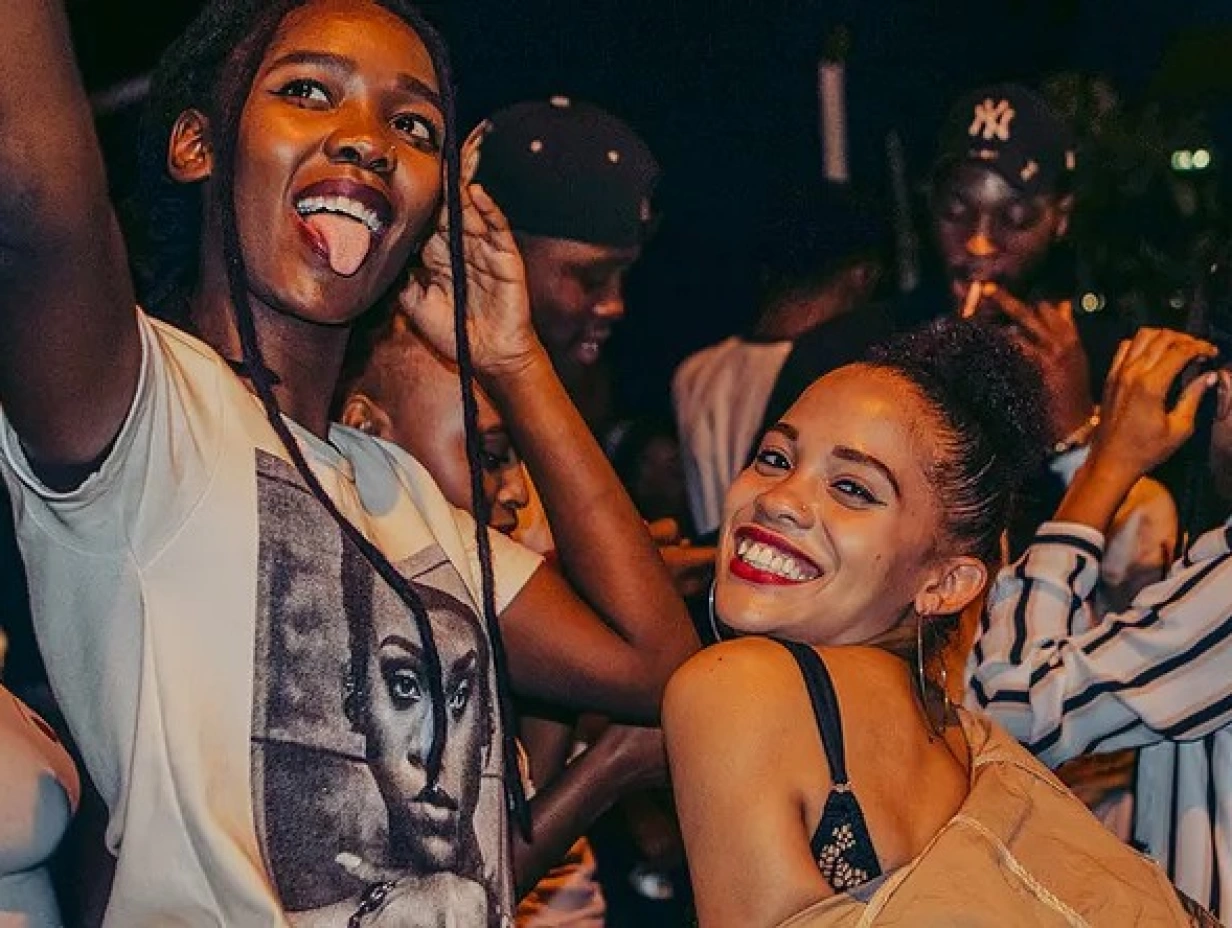
It’s no news that Nightlife and Concerts have become one of the the biggest conversations young Africans Are having now.
In today’s fast-paced world, they simply want to have fun, they want to feel alive, and honestly, that might be the way to go.
Yet, this shift faces heavy pushback. Critics routinely dismiss nightlife, claiming it “fosters an evolving, detached hookup culture” or condemn it as entirely “un-African.”
And yeah, they raise valid anxieties about safety, arguing that the potent mix of heavy alcohol, blasting music, low lighting, and forced physical proximity creates the ideal recipe for everything that can go wrong.
But despite the moral panic, real-time social dynamics favor the active participants over the critics.
The data of human behavior points to a fascinating shift: the dancefloor is fast becoming the new continent-wide dating pool.
The New Meet-Cute Is a Concert Crowd
Talk to enough twenty-somethings across major African cities and you’ll see a pattern is starting to form: more people are meeting potential partners at concerts, festivals, and nightlife spots now than ever. In fact, more than through the custom routes — church, malls or university.
There’s this thing about shared experience that nightlife creates almost instantly. Two strangers screaming the same lyrics, dancing boldly to the same beat drop, or bonding over how terrible the queue for drinks is, these moments compress what might take weeks of conversation into a single night.
It’s not that nightlife replaces emotional connection; it’s that it accelerates the conditions for it, and makes it feel like you’ve known them forever.
The Extroverted Dancer and the Reserved Wallflower Example
Beyond the music, the night acts as a unique equalizer, creating a magnetic pull between opposite personality types who would otherwise never cross paths in broad daylight.
It’s a common dynamic in today’s nightlife, and not just in movies as many people might think.
A highly expressive girl seeing how shy a guy is drags him to come have a dance and share a drink. That genuine interaction can kick-start something…… for both of them.
Because there’s nothing as genuine and inviting and seductive as vulnerability
The Low-Pressure Safe Zone
The everyday dating setup can easily feel like high-stakes job interview. Sitting across from a stranger, thinking deeply about how to respond and not bore them, the awkward silences…….
The stakes feel incredibly high for individuals that are not as outgoing or Extroverted.
The pressure to impress is so real that it can completely stifle a person’s authentic personality, and you are forced to perform, tracking every word and gesture under a microscopic lens.
Nightlife??? It completely flips that dynamic.
The overwhelming sensory input, the blasting speakers, the sweeping lights, the shoulder-to-shoulder movement of the crowd……..
You simply can’t have a stiff, formal conversation when you have to lean in close just to hear each other’s names over the bassline.
The environment naturally breaks down artificial personal space barriers.
Because the room is already loud, chaotic, and high-energy, the pressure to say the “perfect” thing almost entirely disappears.
Stripped of the need to perform, you are allowed to just exist, react, and feel in the moment, giving your true, authentic and unedited self a chance to shine through. And people connect with authentic.
So Does It Actually Last?
Fair question. A connection made under strobe lights and bass drops is one thing — but does any of it survive daylight?
Here’s the thing: every relationship, no matter where it starts, eventually has to leave the venue. The music stops, the lights come on, and two people are left with just each other — no soundtrack, no crowd, no shared adrenaline to lean on.
To keep talking to someone after an honest exciting first time is usually easier than just meeting someone.
But whether it lasts depends on what happens next, the boring parts. The traffic on the way home. The conversation when you’re both tired and the music isn’t doing the work for you anymore.
But here’s what critics often miss: plenty of relationships that started in church pews, lecture halls, or family introductions don’t last either. The venue was never the determining factor — it was always about what two people choose to build once the noise fades.
So maybe the real question is not “does nightlife love last?” It’s “does any love last?”
And nightlife is just one more honest place for that story to begin.
Does Nightlife Have Its Own Excesses?? Yes
To be clear, none of this is an argument that nightlife is risk-free, because it isn’t.
Substance overuse is real. Spaces built around alcohol and, in some scenes, recreational drugs naturally carry higher odds of people overindulging — and decisions made under the influence aren’t always the ones people would make sober.
The environment itself can turn. Crowded, high-energy spaces can shift quickly — peer pressure builds easily in a crowd, and what starts as harmless fun can occasionally tip into something tense or unsafe, especially for women navigating these spaces alone.
Not every “connection” is one. Sometimes what feels like chemistry is just proximity, alcohol, and a good bassline — and mistaking the three for each other is how people end up in situations they didn’t actually sign up for.
These aren’t reasons to write nightlife off. They’re reasons to go in with your eyes open — the same way you would with any setting where people meet.
Because here’s the bright side: for all its chaos, nightlife remains one of the few spaces left where young Africans can be unguarded, unscripted, and completely themselves, and that, more than the venue, the music, or the lighting, might be the real reason it keeps producing love stories worth telling.